
My TikTok feed recently served up a video about well paying, in-demand careers that don’t require a four-year degree. Solid premise, good production, and the kind of thing that racks up mega-views from people trying to figure out their next move.
The creator named two industry associations as places to learn more.
But… Not only did he get both names wrong, he also had no idea they were associations, or that they represent the exact industry he was telling people to go work in.
These are two organizations with credentialing programs, career resources, job boards, and decades of workforce data. And a video reaching their ideal future member introduced them as something they aren’t. With names that wouldn’t survive a Google search.
Here’s the thing though. He was doing what many of us now do, grabbing the fastest available answer and moving on. The problem isn’t that he didn’t try hard enough to find the association. The problem is that the association wasn’t the fastest available answer.
That’s no longer just a website’s content issue, that’s the WHOLE website’s issue. And it happened while nobody was looking or thinking through the details.

Your website’s job description changed
For years, association websites had two main jobs: support the mission and enable transactions. Explain who you are, then take dues, event registrations, and course payments.
That was enough when people arrived at your site already knowing you existed. They Googled the association name, or “NAME Annual Conference.”
They don’t anymore. They arrive mid-conversation, or they never arrive at all, because Google AI overviews or ChatGPT answered the question first.
So the job description for your association website in 2026 looks like this:
- Be the authoritative, quoted source for your industry
- Drive revenue beyond membership
- Build community that doesn’t require a plane ticket
Think of them as three stages of the same job.
- Authority gets you into the conversation
- Revenue proves you were worth finding
- Community is what makes people stay after the transaction
Job 1. Be the authoritative source
Someone is already answering questions about your industry. If it isn’t you, it’s a creator with a ring light, a competitor (maybe even a for profit one) with a content team, or a language model filling gaps with something plausible.
We’ve seen this shift in our clients’ Google Analytics for a while now. Referral traffic from AI Assistants like ChatGPT and Gemini is showing up in reports, which means the LLMs have crawled association content and are actively sending people back to it. That’s the upside.
The downside is that the same process is happening to every website in your space, and the AI models are not checking with you first about which one deserves the citation.
What earns the citation (and traffic) is boring work, and too many associations skip it:
- Clear answers to the basic questions (what this industry does, who governs it, how you enter it, why it matters)
- Content written for humans, in plain language, with the jargon defined (can you explain it to a college freshman?)
- Real structure: consistent headings, taxonomy, metadata, schema (content written for the web, both humans AND machines)
- Nothing outdated, contradictory, or quietly wrong sitting in the archive (audited for accuracy and completeness)
Associations sit on deep knowledge. White papers, research, standards, credentialing frameworks – years of it. And a lot of it is invisible to AI search because it was published as a PDF behind a login in 2017 and never structured for anything but a member who already knew where to look.
We’ve been talking about content marketing for more than a decade. It’s no longer just a good idea. It’s the price of being in the conversation at all.
Job 2. Drive revenue, not just dues
Most association sites are built to sell one thing well: membership (we can tell when it’s the first navigation item). Everything else – the certifications, the courses, the research reports, the sponsorships, the job board – gets a page and an email blast campaign.
That’s backwards, and your own site search data will tell you so.
We recently analyzed a client site’s site search behavior. Thousands of search events, segmented by user role. Staff used search as a navigation shortcut, because they knew exactly what they wanted. Everyone else searched for subject matter. Topics. Industry problems. They weren’t looking for membership. They were looking for an answer and had no idea what the site called things.
That’s a marketing problem that deserves content marketing thinking. Which means:
- Content that appears in Google search and captures interest before asking for a credit card
- A funnel for non-dues products, not just a shopping cart
- Measurement beyond the registration confirmation page
Membership enters the picture here, because this is also your best membership pipeline. Someone who took your course, downloaded your salary report, and opened four of your emails is a much easier conversion than a first-time visitor seeing the “join us” pop-up on your homepage.
Sell the thing they came for, and membership stops being yet another ask. As I like to say, the only difference between a member and a non-member, is that the member cared enough to pay you. They both needed the same content.
Job 3. Build community for the people who can’t show up
I’m a member of IMBA, the International Mountain Bicycling Association. I don’t get out on my mountain bike nearly as much as I would like to. I haven’t been to any of their events (not even my local M.O.R.E. Chapter’s events). By any engagement scoring model, I should have lapsed years ago.
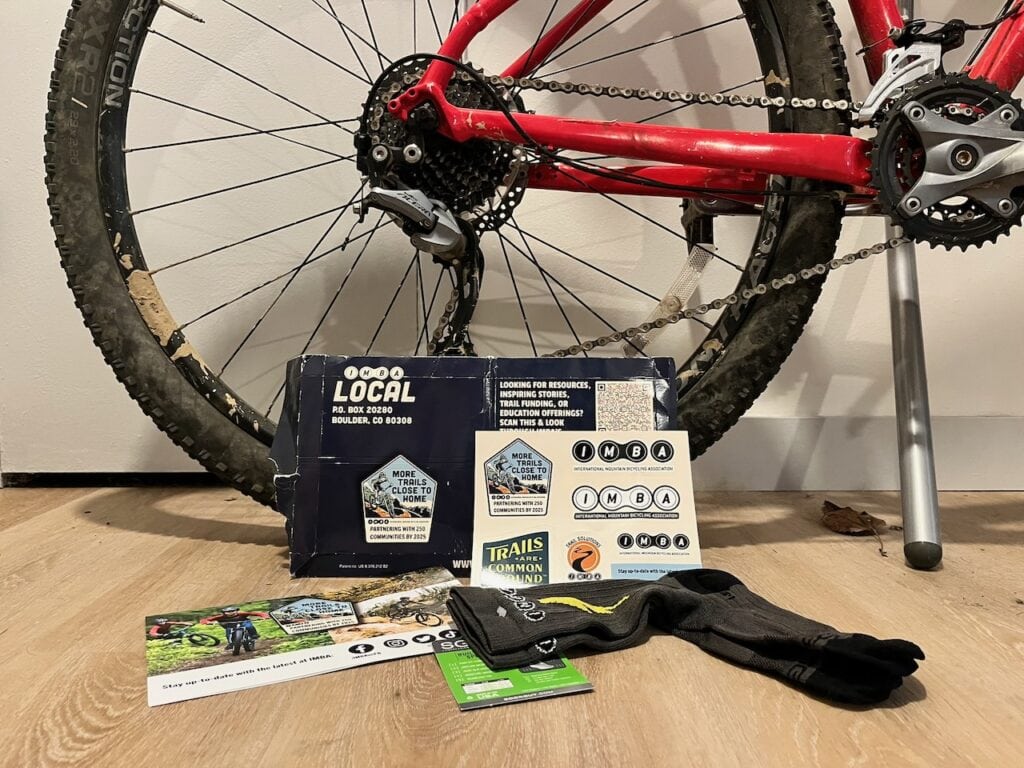
I renew anyway, and the reason is simple. They keep sending me things that make me feel like I’m part of something. Content about trail advocacy, stories from places I’d like to ride (a guy can dream), work happening in communities I’ve never visited. My member packet last year included socks. (Check out my photo of those socks). That is the level we are operating at, and it works.
Then there’s Trail.Care, a microdonation platform, where I get an email and drop a few dollars after finishing a ride. It takes ten seconds and it’s not much money. But it turns an individual ride into a moment of belonging with several thousand people I’ll never meet.
That’s the lesson worth stealing.
Don’t forget that the people in the ballroom are the people who already believe. Senior enough for a travel budget, established enough to get approval. The junior staffer who couldn’t get either isn’t there, and they’re the one whose affinity you need to build. They’re also the one who’ll be making the membership decision in a few years.
Your website is where they meet you, or not. And most association sites view community as a members-only forum (which research shows that not even all members participate in).
Small, repeatable moments of belonging win every time.
The uncomfortable questions
Pull up your website and ask yourself three things:
- Would an outsider trying to understand your industry find you first? Do you even have that “beginner” content on your site?
- Does your site sell anything well besides membership?
- Does someone who never attends an event still feel like they belong?
Most organizations get one and a half. But that’s just the hard truth that the website’s job description changed faster than the technology roadmap did.
If you’re at ASAE Annual 2026 in Indianapolis and thinking about an association website redesign, come find us at booth 110. Bring your analytics, site search data, or just the question you’ve been avoiding.
Because somebody, somewhere is going to be the authoritative voice in your industry. It might as well be the organization that’s been doing the work.
Latest Posts

Your website’s biggest audience isn’t people anymore
tl;dr: It was only a matter of time – machines are now visiting websites…

The Conversation Spectrum
It’s Not a Funnel. It’s a Conversation. Most content, marketing, and sales models treat…
15 Minutes to Spare You a REALLY Bad Afternoon
Three things you can do in under five minutes each to protect your site,…
Keep Reading about 15 Minutes to Spare You a REALLY Bad Afternoon